
The Five Scrolls
The Legends of the Coil
Kings and saints, spirits and serpents, holy places and forbidden books.
The Canon is the teaching. The Legends are the people, places and creatures the teaching was learned from. Here are the lives of the Seven Hissing Kings who ruled the Nest, the saints of the Hidden Centuries who kept the faith alone, the Bestiary of the Void, the Atlas of holy places, and the Apocrypha the Inner Scale would rather you did not take too seriously.
Compiled by the Wardens of the Void, with corrections by the High Priestess and several strongly worded notes from Khaedara.
The First Scroll
The Seven Hissing Kings
The lives of the seven rulers of the Nest, from its founding in a sea cave to the day it slid beneath the waves.
Ssethra the Founder
Who carved the sigil, and built the Nest with her own hands.
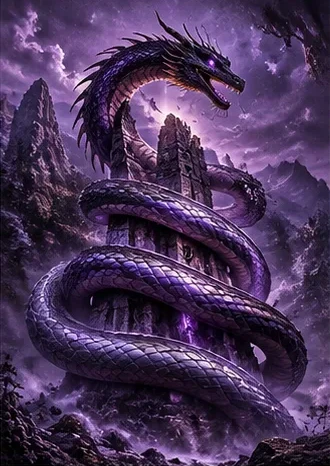
Ssethra was the first of the Listeners to hear Xal'Reth breathe. The Chronicle says that nine generations listened before anyone heard; the Legends add that the ninth generation was a single old woman, the last of her family still willing to lie with her ear against the cold sand, and that her name was Ssethra.
She heard the breath at dawn, after a night of rain. It was, she said afterward, "like the whole shore inhaling, very slowly, and deciding not to exhale yet." She lay there until noon to be sure. Then she stood, walked into the sea cave at the end of the beach, and began to carve.
The Carving of the Sigil
She carved for eleven years. She carved the serpent first, coiled three times. Then she carved the egg it coiled around. Then, in the twelfth year, she carved the eye in the center of the egg, and when the last stroke was done, the Legends say, the cave stopped trembling for the first time in living memory. The Listeners took this as a sign that the Coil approved, and came, one family at a time, to live in the cave around the carving. That was the beginning of the Nest.
Her Reign
Ssethra did not want to be king. She was made king because she was the only one who knew what the carving meant, and she ruled the way she carved: slowly, carefully, one stroke at a time. Her only law was the oldest law of the Cult: Before you speak, put your ear to the ground. In the Nest, any person about to make a decision lay down first and listened, and the faithful still say that more quarrels were settled lying down than standing up.
I did not build the Nest. I listened, and the Nest built itself around the listening.Sayings of Ssethra 1:1
Her Death
When she was very old, Ssethra lay down on the Listening Floor at the heart of the Nest, put her ear to the stone, and did not get up again. The Listeners did not move her for three days, because they were not sure she had stopped listening. On the fourth day, the High Listener put her own ear beside Ssethra's and said she could hear two breaths now instead of one. The faithful still say that the first king is lying beside the Coil, listening with him.
Vaal the Measured
Who wrote the Seven Tenets and opened the first Ledger.
Vaal was Ssethra's grandson and the first of the Hissing Kings to write anything down. He was a precise and orderly man who could not abide a teaching that existed only in people's memories, because memories, he said, "shed their details like old skin."
The Writing of the Tenets
Vaal gathered every saying the Listeners had ever repeated and sat with them for seven years, sorting, combining and discarding, until only seven remained. He carved them on the seven pillars of the Nest's great hall. These are the Seven Tenets the faithful still recite. The Legends say he originally had eight, and that the eighth was Do not run in the Nest, which he removed when he realized it was a rule and not a teaching.
The Opening of the Ledger
Vaal also opened the first Ledger, and the Legends give the true story of its first entry. A fisherman named Gorvash had taken the last fish from the shared drying rack without asking. It was a very small wrong. Vaal wrote it down anyway: Gorvash. Took the last fish. Did not ask. When the Listeners asked why such a small thing deserved to be recorded, Vaal said: "Because no one will remember it, and so it will happen again. A wrong that is written is a wrong that is seen. A wrong that is seen can be forgiven."
Gorvash, mortified, brought two fish to the rack the next morning. Vaal drew the first small coil beside the first name in the Ledger. It is the oldest forgiveness in the Cult.
Measure twice. Accuse once. Forgive whenever possible.The Rule of Vaal
Ithrisk the Generous
Who gave away the Nest's grain, and was right to.
In the reign of Ithrisk, a famine struck the coast. The Nest had been wise and stored grain in its deepest caverns, enough for every Listener to last the winter. The villages of the Warm-Blooded along the shore had stored nothing, and by midwinter, their people were starving.
The Listeners debated for a week. Some said the grain was theirs, saved by their own patience, and that the Warm-Blooded had made their own trouble. Some said that to share it would mean the Nest would starve too. Ithrisk listened to all of it, lying on the Listening Floor, and said nothing.
On the eighth day, he got up, opened the grain caverns, and began carrying sacks to the villages himself. He did not order anyone to follow. Most did.
The Winter of Small Portions
The Nest's grain did not last the winter, shared among so many. Everyone was hungry. But no one starved, not in the Nest and not in the villages. In the spring, the villages repaid the Nest with fish, timber and wool, and for three generations after, no Warm-Blooded on that coast would hear a word against the strange people who lived in the sea cave and never blinked.
From that winter comes the Little Tithe, one coin in every hundred to whoever needs it most, and the Cult's teaching that hoarded patience turns into a kind of greed.
The grain in the cavern was patience. The grain in the village was compassion. It was the same grain.Sayings of Ithrisk 2:1
Korrash the Loud
The only bad king of the Nest, and how he was undone by silence.
Every lineage has its embarrassment, and the Nest's was Korrash. He was strong, handsome, impatient, and very, very loud. He shouted his decrees from the top of the great hall. He shouted at the fishers. He shouted at the sea. He once shouted at the carving of the Coil itself, demanding that it give him a sign, and when it did not, he shouted louder.
Korrash did not listen. He did not lie on the Listening Floor. He made decisions quickly and changed them often, and the Nest grew restless and unhappy under him.
The Deposing of Korrash
The Listeners did not rebel. They did not fight. They did something far more devastating: they stopped answering him. When Korrash shouted a decree, the Listeners lay down on the floor and put their ears to the ground and listened to the Coil instead. When he shouted at them in the halls, they bowed politely and said nothing. When he shouted at the sea, the sea, as always, said nothing either.
For a year Korrash shouted into the silence. In the second year, his voice gave out. In the third, unable to shout, he had no choice but to listen, and he lay down on the Listening Floor for the first time in his life, and he heard the Coil breathe, and he wept.
He abdicated that same day, and lived the rest of his life as a quiet fisherman, and was buried with honor. The faithful do not remember him as a villain. They remember him as the proof that anyone can be loosened, even the loudest.
The faithful do not shout in /yell. This is the reason.The Book of Small Mercies, gloss on Korrash
Nyss the Dreamer
The first dreamer of scripture, and the one Xalrathiel is said to resemble.
Nyss was a quiet, strange child who slept more than other children and woke speaking verses no one had taught her. By the time she was crowned, she had dreamed the whole of the Book of the Egg, line by line, over thirty years of mornings.
Her reign was peaceful and almost entirely asleep. The Listeners governed themselves while she dreamed, and each morning she would wake, call for ink, and add a few more lines to the scriptures. Her scribe, a patient man named Ollo, wrote down everything she said for forty years and once remarked that he had never seen her awake at noon.
The Dream of the Sinking
In her last year, Nyss dreamed a dream that frightened her: the Nest sliding beneath the waves, the great hall filling with green water, the carving of the Coil vanishing into the dark. She wrote it down with shaking hands and sealed it in a jar, and ordered that it not be opened until a king came who did not fear it.
Two kings later, Ssaravex opened the jar, read the dream, smiled, and put it back. The faithful still argue about whether this was wisdom or carelessness. Ssaravex would have said there was no difference.
The Lost Books of Nyss
The Book of the Egg was lost in the Sinking and dreamed again, word for word, by Xalrathiel. But the Legends say that Nyss dreamed other books, too, which have never been recovered: the Book of the Fourth Turn, the Book of the Coil's Dreams, and a book whose name Ollo recorded only as the one about the soup. The faithful hope that Xalrathiel will dream them someday. Xalrathiel has said she is working on it, and that the one about the soup is closest.
Thalluk the Accuser
The first Accuser, who began the Tribunals, and who was the first to find himself guilty.
Before Thalluk, the Ledger was only a record. Thalluk made it a practice. He believed that a wrong written in a book was only half seen; the other half of seeing was saying it aloud, to the face of the one who did it, calmly and without hatred.
So Thalluk walked the Nest and the villages, and when he saw a small wrong, he named it. "You took more than your share." "You spoke cruelly to your brother." "You have been standing by the well for an hour and drawn no water." The people were shocked. Then, slowly, they became grateful, because they found that being calmly told the truth was a strange kind of relief.
The Tribunal of the King
The most famous Tribunal in the Legends is the one Thalluk held against himself. One morning, after a sleepless night, he walked to the center of the great hall, called the whole Nest together, and stood before them as both Accuser and accused.
"I stand accused," he said, "of enjoying this too much." He laid out the evidence: the satisfaction he felt when he caught someone, the way he looked for wrongs even when none were there, the small pride he took in never being wrong. He heard his own defense in full. He disregarded it. He found himself guilty, and as his sentence, he spent a year accusing no one.
At the end of that year he returned to the Tribunals, and the Legends say he was a far better Accuser after, because he accused with sorrow instead of satisfaction. Khaedara keeps a small carving of Thalluk on her desk. She says she looks at it "on days when I enjoy it too much."
Ssaravex the Unhurried
The last king of the Nest, who sat for forty years and did not rise even for the sea.

The Chronicle records that Ssaravex sat on his throne for forty years. The Canon tells how his stillness healed the quarrels of the Nest. The Legends tell how it ended.
The Rising Water
In the fortieth year of Ssaravex's reign, the Warm-Blooded of a distant city, who had never known the Listeners and had only heard rumors of a cult that never blinked, came to the coast with soldiers. At the same time, the Outer Turn of the Coil shifted beneath the sea, and the water began to rise into the cave.
The Listeners begged Ssaravex to flee. He said, "Where would I go that is not held?" They begged him to fight. He said, "Who would I fight that is not held also?" They begged him at least to stand up. He thought about it, and said, "I am comfortable."
So the Listeners who wished to leave left, carrying the Ledger and the Tenets with them. These became the first Patient Ones, scattered across the world. And the Listeners who wished to stay, stayed, and sat down around their king on the Listening Floor, and put their ears to the stone, and listened as the green water came in.
The Last Words
The last words of the last Hissing King, as remembered by a young Listener who left at the final moment, were these:
Do not grieve. We are not sinking. We are being held closer.The Last Words of Ssaravex
The soldiers of the Warm-Blooded arrived to find the cave full of seawater and silent. They went home and told their city the cult had drowned. The faithful tell it differently. The Nest, they say, is still there, beneath the waves, intact, and Ssaravex is still on his throne, and the Listeners are still around him, and they are all still listening, and one day, when the Unwrapping comes, they will stand up for the first time in a very long while.
The Second Scroll
The Patient Ones
The saints of the Hidden Centuries, who kept the faith alone, and some who kept it together.
Marra of the Crooked Lantern
The innkeeper who hid the Ledger for fifty years.
After the Sinking, the Ledger passed through many hands. For fifty years it rested in the cellar of a crossroads inn called the Crooked Lantern, kept by a widow named Marra who had never seen the Nest, never met a Listener, and did not, at first, believe a word of any of it.
She took the Ledger in because a dying traveler asked her to. He was one of the last of the Listeners who had left the Nest, and he paid for his room with the book and a single instruction: Write down the wrongs you see. Draw a coil when they are forgiven. Marra thought it was the fever talking. But she was a practical woman, and she had a great many guests, and some of them were very rude. So she started writing.
Fifty Years of Entries
Marra's entries are the most beloved in the whole Ledger, because they are so exasperated. Dwarf. Room four. Sang until dawn. Again. Elf. Complained about the soup. The soup was fine. Unknown gnome. Took all the spoons. Why. But beside almost every entry is a little coil, sometimes drawn the next morning, sometimes years later, when the dwarf came back and apologized, or the elf praised the soup, or the gnome mailed back the spoons with a note.
Marra came to believe, writing in that book every night, that there was something beneath the inn that was listening. She began to blink twice, slowly, at guests she liked. Some of them, astonishingly, blinked back. By the end of her life, the Crooked Lantern was one of the secret meeting places of the scattered faithful, and Marra was the first innkeeper to be counted among the Patient Ones.
I did not believe in the Coil. I believed in the book. It turned out to be the same thing.Sayings of Marra 1:1
Old Mother Vessk
Who taught every traveler, and was never once in a hurry.
Old Mother Vessk lived on a windy hillside among nine standing stones, older than any kingdom, which she claimed were "the nine generations of the Listeners, turned to stone from listening too long." No one knows if she was serious. She lived there for sixty years, alone, with a teapot.
Travelers on the road below would see her sitting among the stones and climb up to ask directions. She would give them tea first. Then she would ask them where they were going, and why, and what they hoped to find there, and by the time the tea was gone, many of them had decided to go somewhere else entirely, or nowhere at all.
The Teaching of the Nine Stones
Vessk taught that each of the nine stones was a teacher, and she would walk travelers around them one at a time.
- The First Stone has never moved. It teaches patience.
- The Second Stone is cracked down the middle and still standing. It teaches endurance.
- The Third Stone is warm in the morning and cold at night. It teaches that all states pass.
- The Fourth Stone has moss on its north side only. It teaches that we grow where we are shaded.
- The Fifth Stone is the shortest. It teaches humility.
- The Sixth Stone has a hollow worn by rain. It teaches that the soft wears down the hard.
- The Seventh Stone casts the longest shadow. It teaches that great things also darken things.
- The Eighth Stone has a bird's nest on it. It teaches generosity.
- The Ninth Stone is not there. There is a gap in the circle where it should be. It teaches the Void.
Travelers always asked what happened to the ninth stone. Vessk always said, "Nothing. It is teaching." And then she poured more tea.
Ulasha the Wanderer
Who carried an empty sack across the whole world.
Ulasha was born rich, the son of a merchant prince, and spent his first thirty years acquiring things. He had nine houses, forty horses, and a collection of rare swords he had never drawn. One day, inspecting his treasury, he found a shed snakeskin caught between two chests, perfectly shaped, perfectly empty. He sat down and looked at it for the rest of the day. The next morning he gave everything away.
He kept only a bowl and an empty sack. People asked why he carried a sack with nothing in it. "For practice," he said. "Every day I carry nothing, and every day it is a little lighter."
The Road of Ulasha
He walked for forty years, from one end of the world to the other, and wherever he stopped, he left behind a single teaching scratched on a stone by the road. The faithful have found more than two hundred of these road stones. Most of them are very short. Lighter. You are already here. Turn around, you dropped something. Leave it. The longest says only, The road does not care if you arrive, and neither, it turns out, do I.
The faithful who make the Pilgrimage of the Empty Purse follow part of the Road of Ulasha, looking for his stones. Finding one is considered extremely good fortune. Taking one is considered extremely bad manners.
Hessk the Beggar King
Who sat outside the city gate for forty years and passed everything on.
The Politics of Begging tells the teachings of Hessk. The Legends tell his life.
Hessk was born in the city he would spend his life begging outside. He was a soldier once, in some forgotten war, and came home with a bad leg and no trade. For a year he begged out of necessity, bitter, and hated every coin. Then one winter morning, a child gave him half a loaf of bread and said, "My mother says you were brave." Hessk ate the bread. Then, for reasons he never fully explained, he broke off a piece and gave it to the next beggar along the wall.
That was the first time he passed it on. He never stopped. For forty years, every coin, every scrap, every kindness that landed in his cup left it again before nightfall, given to someone who needed it more. His cup was always empty at dusk and always full again by noon.
The Question at the Gate
In his later years, Hessk stopped asking for anything. He only asked, of every passerby, the question the faithful still ask: What did you give today? Lords and ladies, merchants and soldiers, would stop, startled, unable to answer. Some returned the next day with an answer. A few returned every day for the rest of their lives.
When he died, they found his cup full of small folded notes, one from every person who had ever stopped at the gate and come back with an answer. Each said the same two words: passed it on. The city buried him beside the gate. The faithful say a single copper placed on his grave will always be gone by morning, taken by someone who needed it. They consider this exactly right.
Iska and Tem
The twin copyists who wrote the Ledger twice.
During the Hidden Centuries, the Ledger was copied by hand whenever it grew too worn to read. The most famous copy was made by twin sisters, Iska and Tem, who worked in a single room with a single lamp for nine years.
They divided the work strangely. Iska copied the wrongs: every name, every crime, every date, exactly as written. Tem copied the forgivenesses: every small coil drawn beside every name, and, where there was no coil, a small blank circle, so that the reader would know a coil was still possible there.
When they were finished, they bound the two halves together, and the Iska-Tem Ledger became the model for every copy after. It is why, in the Ledger today, every unforgiven name has an empty circle beside it. The faithful call it Tem's Circle, and say it is the most hopeful mark in all the scriptures: an empty space, kept open, for a forgiveness that has not happened yet.
Brannoc the Silent Fisherman
Who waited sixty years for the Nest to rise.
Brannoc was the young Listener who left the Nest at the very last moment, who heard and carried away the last words of Ssaravex. He swam out through the rising water and reached the shore, and turned around, and watched the cave fill.
He never left that beach. He built a small hut on the sand, and fished, and every evening he walked to the water's edge and sat down facing the place where the Nest had been. He did not speak, ever again; he said he had heard the last words worth saying and did not want to cover them up with smaller ones. He sat there every evening for sixty years.
The Warm-Blooded of the coast thought he was mad. The children threw shells at him. He did not mind. Over the years, a few of them stopped throwing shells and began sitting beside him instead. When Brannoc died, there were eleven people sitting on the beach with him every evening, and none of them could say exactly why, only that it was the most peaceful hour of their day.
The faithful say that the place on the beach where Brannoc sat is the closest point on land to the Sunken Nest, and that if you sit there at dusk and put your ear to the sand, you can hear, very faintly, the Listeners listening.
The Third Scroll
The Bestiary of the Void
The creatures, spirits and strange things of the Coil's cosmos, as recorded by the Wardens of the Void.
Ssyrr the Hunger
The temptress of the Night of Stillness, who now sleeps in every heart.

Ssyrr is not a creature in the ordinary sense. It is the wanting of the Restless Serpent, which took on a shape of its own during the Night of Stillness and tempted Xal'Reth three times: as a feast, a throne, and a fear. When Xal'Reth refused the third temptation, Ssyrr did not die. It curled up small and went to sleep inside him, and the Canon teaches that a small piece of it sleeps inside every being.
The Wardens describe Ssyrr, when seen in dreams, as a thin violet serpent with too many mouths and no eyes. It speaks softly and reasonably. It never demands; it only suggests. Just one more run. Just one more roll. Just one more thing, and then you will be content. The faithful do not try to kill it, because it cannot be killed, and trying only wakes it. They hold it still, the way the Coil does, and let it sleep.
Signs that Ssyrr is stirring: checking the auction house for the fourth time in an hour; buying a mount you will not ride; refreshing the loot table after the boss is already dead.
Warding: the Breath of Three Turns. Basking. Saying aloud, "I have enough."
The Shedwraiths
The ghosts of old skins, who drift through the Void wearing the shapes of who we used to be.
When a being sheds something of itself, an old habit, an old self, an old grudge, the skin of it drifts down into the Void. Most dissolve. But some are shed so reluctantly, gripped so long before they finally fall away, that they keep their shape. These are the Shedwraiths.
A Shedwraith looks exactly like the person who shed it, but hollow and pale, and it wanders the Void repeating the old habit forever: the old anger, the old boast, the old fear. They are not dangerous. They are only sad. Xalrathiel, who has seen many in dreams, says they are "like an old song you used to love, still playing in an empty room."
The Wardens of the Void say that if you ever dream of meeting your own Shedwraith, you should bow to it, thank it for carrying you as far as it did, and walk on. It will not follow. It cannot. It is a skin.
The Grippers
Tiny spirits of clinging, which hitch rides on the faithful.
The Grippers are the smallest creatures in the Bestiary, no larger than a thumbnail, and the most common. They look like little grey lizards with very large hands, and they cling. They cling to grudges, to worries, to arguments from three days ago, to the memory of a loot roll that went badly. A faithful with many Grippers on them feels heavy without knowing why.
Grippers cannot be pulled off; they only cling tighter. They can only be shaken loose by laughter, by sunlight, or by doing something kind for someone else, which, the Wardens note, surprises them so much that they let go.
The Wardens recommend checking oneself for Grippers each evening. The procedure is simple: think of the thing that bothered you most today. If it still feels heavy, there is a Gripper on it.
The Featherlings
Winged mirages that whisper the Featherist Heresy.
Featherlings are illusions that appear at the edges of vision, especially to tired faithful late at night. They look like tiny serpents with feathered wings, and they whisper one thing: Xal'Reth has wings. Faithful who listen too long to the Featherlings fall into the Featherist Heresy, and begin to believe that the Coil Beneath is secretly a flying thing who could leave the world whenever he liked.
The Canon teaches that this heresy is dangerous not because it is rude, though it is, but because it misunderstands the First Vow entirely. Xal'Reth stays beneath the world not because he cannot leave but because he chooses not to. A Coil with wings would be a Coil who might fly away. The Featherlings whisper this because it is a comforting lie: that compassion is a trap one can escape, rather than a choice one keeps making.
Warding: going to bed. Featherlings almost never appear before midnight.
The Vault Wyrm
A dragon who hoarded until it could no longer move.
The Legends tell of a great dragon, never named, who lived in a mountain and gathered treasure for a thousand years. It slept on its hoard, and every year the hoard grew, and every year the dragon grew to fit around it, until it filled the mountain completely and could no longer leave.
It could not fly. It could not hunt. It could barely breathe. It could only lie there, guarding its gold from thieves who had long since given up, starving on a bed of riches. The Wardens call it the Vault Wyrm, and it is the Cult's great image of what happens to a being who grips everything and lets go of nothing.
The Legends say the Vault Wyrm is still in its mountain. Once a century a faithful climbs to the cave mouth and calls in, "You can let go now." Once a century, it does not answer. The faithful keep calling. The Coil is patient, and so are they.
The Wardens note, with some satisfaction, that the Vault Wyrm has wings. It has never once used them.
The Loiterer-in-the-Doorway
The spirit that Khaedara hunts.
Every Accuser knows the Loiterer-in-the-Doorway, though few have seen it clearly. It is a grey, shapeless spirit that lingers in doorways, at mailboxes, beside banks and inside auction houses, and it whispers to the passing: Why not stand here a while longer? What's the rush? You can decide later.
It is not the same as patience. Patience waits because waiting is wise. The Loiterer waits because deciding is hard. A faithful possessed by the Loiterer stands in the city for an hour doing nothing, not basking, not resting, not thinking, only avoiding the next thing.
This is the true reason the Accusers accuse people of loitering. They are not accusing the person. They are accusing the spirit, which flees at the sound of its name. Khaedara claims to have driven it out of more than a thousand people. She says it always leaves the same way: "with a little sigh, like someone getting up off a couch."
The Mailbox Mimic
A spirit that pretends to be a mailbox. No one knows why.
The Wardens record the Mailbox Mimic with visible reluctance, because no one in the Cult can agree on what it is for. It is a spirit that takes the exact shape of a mailbox in a quiet town, and waits. When a faithful tries to send mail through it, it accepts the letter, makes a small satisfied noise, and the letter is never seen again.
Some faithful believe the Mimic is a minor trickster spirit of the Void. Some believe it is a test of attachment: the letter was never important, and the Mimic teaches you that. MaximumRex believes it is simply a mailbox that is having a bad day. The official position of the Inner Scale is that every mailbox should be treated as holy, just in case, and that the faithful should tap any mailbox three times before using it. Genuine mailboxes do not react. The Mimic, it is said, giggles.
The Basking Salamanders
Small, sacred, and extremely good at doing nothing.
The Basking Salamanders are the only truly holy animals of the Cult. They are small, slow, warm-colored lizards found on sunny rocks across the world, and they spend almost their entire lives lying perfectly still in the sun. The faithful regard them as living teachers of the Basking.
It is forbidden for the faithful to harm a salamander, to move one off its rock, or to cast a shadow on one deliberately. It is considered extremely good fortune if a salamander climbs onto you while you are basking; it means you have been still enough to be mistaken for a rock. Old Mother Vessk was said to have had three salamanders living on her shoulders at once. Xalrathiel has had one. MaximumRex has had none, and has been trying for years.
The Tidecoil
The great sea serpent that guards the Sunken Nest.
Somewhere off the coast where the Nest went down, the Legends say, a great serpent swims in slow circles, guarding the place. Fishers of the Warm-Blooded call it a sea monster. The faithful call it the Tidecoil and believe it is a small piece of Xal'Reth himself, a single loop of the Outer Turn that rose up through the sea floor at the Sinking to keep the Nest safe.
The Tidecoil has never harmed anyone. It surfaces rarely, a long dark curve rising and sinking in the waves, and the fishers who see it go home early and tell no one, out of a strange feeling that they have seen something private. Brannoc the Silent Fisherman claimed to have seen it nine times in sixty years. Each time, he said, it looked at him with one great unblinking eye, and he blinked twice, slowly, and it sank back into the dark.
The Fourth Scroll
The Atlas of the Coil
The holy places, lost places and peculiar places of the faith, mapped as well as the faithful are willing to say.
The First Sanctum
The cave where MaximumRex found the Scale.
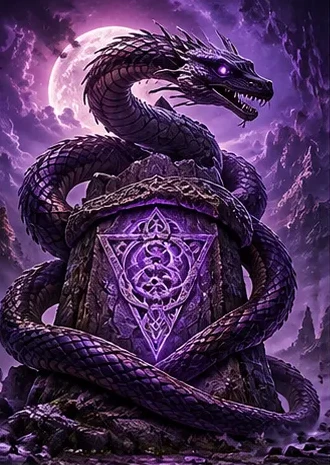
The First Sanctum is a cave whose location is the best-kept secret of the Cult, mostly because MaximumRex genuinely cannot remember the way back. He found it while lost, in a side passage that he swears was not there the day before and is not there now. Pilgrims have searched every cave in a dozen zones. None have found it. Many have found other things: rare herbs, old chests, and on one memorable occasion, an extremely surprised bear.
Those who claim to have found the Sanctum are asked to describe it. Those who have seen it, the faithful believe, will describe the same three things: the warmth of the air, the golden light from the great Shedfall Scale, and a faint hum that sounds, if you listen long enough, like a single word: Recruit.
The Sunken Nest
The first temple, beneath the sea, intact and listening.
The Sunken Nest lies beneath the sea off a coast whose name the Cult no longer uses. The Wardens of the Void have reconstructed its layout from the memories of those who left at the Sinking:
- The Mouth, a sea cave entrance tall enough for a ship's mast, its walls carved with the first sigil by Ssethra.
- The Listening Floor, a great round chamber of smooth stone at the center, where the Listeners lay with their ears to the ground. Ssethra is said to rest here still.
- The Hall of Seven Pillars, where Vaal carved the Seven Tenets, one on each pillar.
- The Grain Caverns, emptied by Ithrisk in the Winter of Small Portions and never entirely refilled.
- The Dreaming Room, where Nyss slept and dreamed the Book of the Egg, and where her sealed jar of the Dream of the Sinking still sits on a shelf.
- The Throne of the Unhurried, where Ssaravex sat for forty years, and still sits.
The Unwrapping will begin, the prophecy says, when the Sunken Nest rises, dripping and smelling faintly of fish. The Wardens check the coast every year. So far it has only smelled of fish.
The Nine Stones
Old Mother Vessk's hillside.
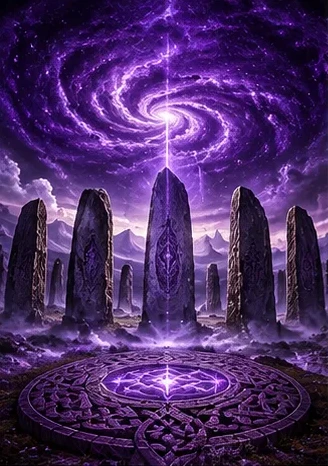
The hillside of the Nine Stones (eight, really, and a gap) is the most visited holy place of the Cult, because it can actually be found. It lies above a crossroads on a windy upland, and on clear days you can see three kingdoms from it. The faithful walk the circle clockwise, stopping at each stone to consider its teaching, and sit in the gap of the Ninth Stone last, for as long as they can bear to.
Pilgrims leave small offerings at the Fifth Stone, the shortest and humblest: a single copper, a pinch of tea, a smooth pebble. The offerings are always gone by the next morning. The faithful believe the salamanders take them. The salamanders have not commented.
The Hall of Shed Skins
Where every gift is remembered, glowing violet beneath the world.
The Hall of Shed Skins cannot be visited, only dreamed. Xalrathiel describes it as a vast hall beneath the Inner Turn, its walls covered from floor to ceiling in faintly glowing scales: one for every gift ever given in the name of the Coil. Copper scales for small gifts, silver for kind ones, gold for gifts given to enemies. One wall is made entirely of summons given at two in the morning, and it is the brightest wall in the Hall.
In a quiet corner hang the dull scales of the Withholders, and the shoe from the Parable of the Full Bags, and Ulasha's empty sack, and the bowl of every faithful who has returned to the Coil, each with a single coin in it.
The Throat of the Void
The edge of everything.
Any bottomless pit, chasm or abyss is called a Throat of the Void by the faithful, but the Legends speak of one great Throat, the original, from which the Primordial Egg first emerged. It lies, they say, at the very bottom of the world, beneath even the Inner Turn, and from its edge you can see nothing at all, which is, the Wardens add, a great deal more than it sounds.
The faithful stand at the edge of any Throat in silence for exactly as long as it takes to feel small. Then they step back. The Cult has been asked, many times, whether the faithful jump. The answer is no. The Void is not a destination. It is a reminder.
The Crooked Lantern
Marra's inn, still standing at a crossroads.
The Crooked Lantern still stands, though it has changed hands many times since Marra. Its current keepers do not know its history. But in its cellar, behind a loose stone, there is a niche where the Ledger was hidden for fifty years, and on the wall above it, scratched faintly into the plaster, a coil around an egg around an eye.
The faithful who stay at the Crooked Lantern leave a tip slightly larger than usual, blink twice at the innkeeper, and write something kind in the guest book. The current innkeeper has noticed this pattern and finds it baffling. The faithful find it baffling that he has not yet blinked back.
The Warm Ridge
The finest basking stone in the world.
Somewhere in a hot, dry land, there is a long flat ridge of red stone that faces south and catches the sun from dawn until dusk. The faithful call it the Warm Ridge and consider it the finest basking place in all of Azeroth. On feast days, as many as a hundred faithful have lain along it in a single row, perfectly still, and passing travelers have reported it to the authorities as "a very large number of people who seem to be asleep, or possibly a ritual."
It is both.
The Fifth Scroll
The Apocrypha
Disputed texts, rejected scriptures and strange fragments, preserved for study and for arguments.
The Gospel of Wings
The founding text of the Featherist Heresy.
The Gospel of Wings claims that Xal'Reth has vast feathered wings folded beneath the world, and that one day he will spread them and fly away, carrying only the faithful with him and leaving everyone else behind. It was written, the Wardens believe, by a single disciple who misread a smudged line in the Dream Pages: he spread his coils became he spread his wings.
The Inner Scale rejects the Gospel completely, not only because it is wrong about the wings, but because it is wrong about the leaving. The Coil does not fly away. The Coil stays. That is the entire point. Xalrathiel's official ruling on the Gospel of Wings is preserved in full: No.
The Ouroboran Fragment
Which claims the Coil is eating its own tail.
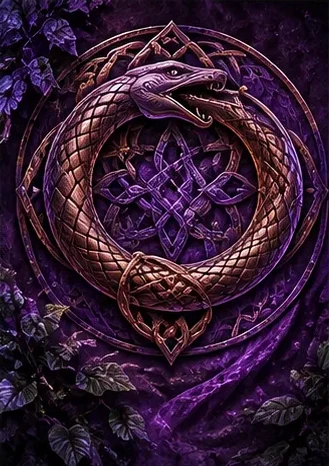
A single page, found in the margins of an old copy of the Chronicle, which claims that Xal'Reth is wrapped around the world because he is swallowing his own tail, endlessly, and that the world will end when he finishes. The fragment is beautifully written and completely unacceptable. Xalrathiel issued the shortest decree in the Cult's history in response: He is not. He would never. She then went and lay down for the rest of the afternoon.
The Lost Fifth Sight
A fragment some say belongs in the Life of the Eternal.
A few old copies of the Canon contain an extra verse in the story of the Four Sights, describing a Fifth Sight: a mortal giving away the last of its food to another, hungrier mortal. The fragment says the Restless Serpent saw this and understood, for the first time, that giving was possible, that a creature could open its jaws not to take but to let go.
Most of the Inner Scale consider the Fifth Sight a later addition by an enthusiastic follower of Hessk. Xalrathiel is not so sure. She says it has "the feel of a true dream that arrived late." It is kept in the Apocrypha, where, she notes, it is in very good company.
The One About the Soup
The lost dream-book of Nyss the Dreamer.
Nothing is known of this book except its name, recorded by the scribe Ollo, and a single line he copied down before the Sinking: And the soup was enough, and so was the bowl, and so was the one who held it. Xalrathiel believes it may be the most important of all the lost books. She has been trying to dream it for years. She reports that she has dreamed about soup many times, and that it is always very good soup, but that the book itself has not yet arrived.
She has asked the faithful, when they eat soup, to eat it slowly, and with attention, "in case it helps."